Key Takeaways
- Reactions are rare but require preparedness: Contrast media allergic reactions occur in 0.3-1.4% of injections, with life-threatening anaphylaxis in 0.04%, but staff must be ready for quick intervention.
- Severity guides treatment: The ACR five-point assessment classifies reactions, with mild reactions needing observation, moderate requiring multiple meds, and severe activating emergency protocols with epinephrine.
- Emergency meds readiness is essential: Staff must know the location and dosing protocols for emergency drugs like diphenhydramine, epinephrine, and others.
- Premedication for high-risk patients: Patients with prior moderate or severe reactions need premedication with prednisone and diphenhydramine; shellfish allergy alone doesn’t require it.
- Documentation and training are key: Proper reaction documentation aids quality improvement, while continuous training and simulation ensure staff competence in emergency situations.
Contrast-enhanced imaging has become indispensable for accurate diagnosis across radiology departments nationwide. While these procedures are generally safe, allergic reactions to contrast media occur in up to 1.4% of injections, creating potentially life-threatening emergencies that demand immediate, expert response. Every imaging staff member, from technologists to nurses, must understand recognition, treatment, and prevention protocols to protect patient safety.
This comprehensive guide provides evidence-based emergency protocols aligned with 2024 ACR guidelines, covering everything from the five-point rapid assessment system to severity-specific medication dosages and long-term prevention strategies for managing contrast media allergic reactions in your imaging department.
What Are Contrast Media Allergic Reactions And Why Are They Important for Imaging Staff?
Contrast media allergic reactions represent a critical safety concern in medical imaging. While most reactions are mild, rapid recognition and response can prevent life-threatening complications. Imaging staff serve as the first line of defense, making their contrast allergy management training and preparedness essential to patient safety.
What Is Contrast Media And How Is It Used In Medical Imaging?
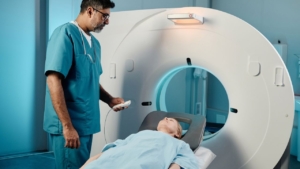
Contrast media enhances the visibility of internal structures during diagnostic imaging. Two primary types dominate clinical practice: gadolinium-based contrast agents (GBCAs) for MRI enhancement and iodinated contrast media (ICM) for CT and X-ray procedures. Both types are administered intravenously, while iodinated contrast also allows oral and rectal administration for specific gastrointestinal imaging protocols.
Modern contrast agents use low-osmolar formulations to minimize adverse reactions. Iodinated contrast is available in both low-osmolar and iso-osmolar versions, with osmolality directly affecting patient tolerance and reaction risk. These formulations have significantly reduced reaction rates compared to older high-osmolar agents.
What Are Contrast Media Allergic Reactions?
Contrast media allergic reactions are hypersensitivity responses that occur when the body’s immune system reacts to the contrast agent. These reactions are classified by severity: mild, moderate, and severe.
Mild reactions present with localized symptoms, including hives (urticaria), itching, and limited rash. These typically resolve with minimal intervention. Moderate reactions escalate to widespread skin manifestations, facial edema, bronchospasm, and mild hypotension. Severe reactions are life-threatening events characterized by severe hypotension, laryngeal edema, and cardiovascular collapse requiring immediate emergency intervention.
Why Are Contrast Media Allergic Reactions A Major Concern For Imaging Staff?
Contrast allergic reactions demand heightened staff vigilance for several critical reasons:
- Significant incidence rates: Immediate reactions occur in 0.3% to 1.4% of low-osmolar contrast injections, affecting hundreds of patients daily across medical facilities
- Life-threatening potential: Aggressive anaphylactic reactions occur in 0.04% of cases, creating genuine mortality risk despite low frequency
- Reaction unpredictability: Mild reactions may rapidly evolve into moderate or severe reactions, requiring constant patient monitoring throughout the observation period
- Treatment urgency: All moderate and severe reactions require prompt, aggressive treatment to prevent adverse outcomes and reduce mortality risk
- Mandatory staff preparedness: Imaging staff must maintain basic life support certification and emergency response competency as standard practice requirements
How Can Imaging Staff Recognize Contrast Media Allergic Reactions Early?
Early recognition of contrast reactions is critical for effective intervention. Staff must rapidly assess symptoms and match severity to appropriate response protocols. The following guidelines provide clear recognition criteria for immediate decision-making, supported by the radiology emergency protocol.
Common Symptoms Of Contrast Media Allergic Reactions By Severity
| Reaction Severity | Symptoms |
| Mild | Urticaria (hives), itching, limited rash |
| Moderate | Widespread urticaria, facial edema, bronchospasm |
| Severe | Hypotension, laryngeal edema, cardiovascular collapse |
Mild vs. Severe Contrast Media Reactions: Comparison And Response
| Reaction Severity | Symptoms | Immediate Treatment | Medications | Monitoring |
| Mild | Urticaria, itching, limited rash | Observation 20-30 minutes | Antihistamine (optional) | Vital signs every 15 minutes |
| Severe | Hypotension, laryngeal edema, cardiovascular collapse | Emergency protocol | Epinephrine, IV fluids, corticosteroids | ICU-level monitoring |
Critical distinction: Mild reactions typically require no medical treatment but demand vital sign monitoring to detect clinically silent hypotension in supine patients. Severe reactions require immediate activation of emergency response systems (e.g., 911) and aggressive pharmacological intervention.
Warning Signs Requiring Immediate Medical Attention
The ACR 2024 guidelines identify five critical assessment points for rapid reaction evaluation:
- Patient’s general appearance – Assess overall condition and level of distress
- Speech ability and voice quality – Evaluate for airway compromise or laryngeal edema
- Breathing quality – Assess respiratory function, rate, and signs of distress
- Pulse assessment – Check cardiovascular status and rhythm
- Blood pressure measurement – Detect hypotension requiring immediate intervention
These assessments enable rapid severity determination and targeted treatment initiation. Any compromise in airway, breathing, or circulation demands immediate emergency response activation.
What Are The Immediate Steps Imaging Staff Should Take During A Contrast Media Allergic Reaction?
Structured response protocols ensure consistent, effective management of contrast reactions. Following standardized steps reduces response variability and improves patient outcomes. These include a contrast reaction workflow that distinguishes between mild and severe reaction management.
Steps For Managing Mild Allergic Reactions
- Obtain vital signs immediately to detect hypotension (may be clinically silent in supine patients)
- Observe patient for 20-30 minutes minimum to ensure clinical stability or recovery
- Monitor vital signs every 15 minutes throughout the observation period
- Consider antihistamine administration (25-50 mg PO/IM) for symptomatic urticaria, though often unnecessary
- Watch vigilantly for progression to moderate or severe reaction requiring escalated intervention
Emergency Protocol For Severe Reactions (anaphylaxis response)
- Activate the emergency response system immediately (call 911 or the facility emergency code)
- Administer epinephrine 0.1-0.3 mg IM, repeat as needed for persistent symptoms
- Provide rapid IV fluid resuscitation: 1-2 L normal saline IV
- Administer corticosteroids: Methylprednisolone 125-250 mg IV
- Give diphenhydramine 50 mg IV for histamine blockade
- Administer albuterol 2.5-5 mg nebulized if bronchospasm is present
- Initiate ICU-level continuous monitoring of vital signs and cardiac rhythm
- Apply basic life support techniques as trained and needed
Essential Equipment For Managing Allergic Reactions
| Equipment | Purpose | Location Requirements |
| Emergency drug kit | Contains epinephrine, antihistamines, corticosteroids, and resuscitation medications | Immediately accessible in imaging room or adjacent area |
| Epinephrine auto-injector | Rapid intramuscular epinephrine delivery for anaphylaxis | Within emergency drug kit, clearly labeled |
| Oxygen delivery system | Provides supplemental oxygen for respiratory compromise | Mounted on wall or mobile tank, readily accessible |
| Blood pressure monitor | Detects hypotension requiring intervention | Standard imaging room equipment, immediately available |
| IV access supplies | Enables rapid fluid resuscitation and medication delivery | Stored in emergency kit or designated location |
| Nebulizer with albuterol | Treats bronchospasm associated with moderate-severe reactions | Available in emergency kit or respiratory equipment area |
Critical requirement: All imaging staff must know the exact location and use procedures for emergency equipment. Regular drills ensure competency and rapid response capability during actual emergencies.
How Should Imaging Staff Administer Emergency Medications For Allergic Reactions?
Proper medication administration requires knowledge of dosages, routes, and timing specific to reaction severity. Staff must understand when each medication is indicated and how to administer it safely under emergency conditions.
Medications Used in Managing Contrast Media Allergic Reactions
| Medication | Mild Reaction | Moderate Reaction | Severe Reaction | Purpose |
| Diphenhydramine | 25-50 mg PO/IM | 50 mg IV | 50 mg IV | Antihistamine for urticaria and itching |
| Epinephrine | Not indicated | 0.1-0.3 mg IM (if bronchospasm) | 0.1-0.3 mg IM, may repeat | First-line for anaphylaxis, bronchospasm |
| Methylprednisolone | Not indicated | 125 mg IV | 125-250 mg IV | Corticosteroid to reduce inflammation |
| Albuterol | Not indicated | 2.5 mg nebulized | 2.5-5 mg nebulized | Bronchodilator for breathing difficulty |
| Normal Saline | Not indicated | 500-1000 mL IV | 1-2 L IV rapid | Volume resuscitation for hypotension |
Medication Administration Based On Reaction Severity
Mild Reaction Protocol:
- Consider diphenhydramine 25-50 mg PO/IM for symptomatic relief (optional)
- Administer only if urticaria causes significant patient discomfort
- Maintain observation regardless of medication administration
Moderate Reaction Protocol:
- Administer diphenhydramine 50 mg IV immediately
- Give methylprednisolone 125 mg IV
- If bronchospasm is present: administer epinephrine 0.1-0.3 mg IM
- Provide albuterol 2.5 mg nebulized for respiratory symptoms
- Start IV fluids 500-1000 mL as needed for hypotension
Severe Reaction Protocol:
- Activate the emergency response system immediately
- Administer epinephrine 0.1-0.3 mg IM (may repeat every 5-15 minutes)
- Initiate rapid IV fluid bolus 1-2 L of normal saline
- Give methylprednisolone 125-250 mg IV
- Administer diphenhydramine 50 mg IV
- Provide albuterol 2.5-5 mg nebulized for respiratory distress
Steps To Ensure Prompt Medication Administration
- Verify emergency drug kit location and contents at shift start
- Maintain current basic life support certification for all staff members
- Perform rapid six-point assessment: consciousness level, skin appearance, phonation quality, lung sounds, blood pressure, heart rate
- Follow ACR treatment algorithms immediately once reaction severity is determined
- Know emergency response activation procedures specific to your facility (phone number, code system)
- Practice medication preparation during drills to reduce administration time
- Check expiration dates on emergency medications monthly
What Are The Roles Of Imaging Nurses And Technologists During An Allergic Reaction?
Clear role definition prevents confusion during emergencies and ensures comprehensive patient care. Both nurses and technologists contribute essential functions that together create an effective response team.
Primary Responsibilities Of Imaging Nurses
- Administer medications according to established severity protocols and physician orders
- Monitor vital signs continuously for moderate reactions requiring active intervention
- Monitor vital signs every 15 minutes for mild reactions during the observation period
- Provide ICU-level continuous monitoring for severe reactions, including cardiac rhythm and oxygen saturation
- Perform rapid patient assessment using the ACR five-point evaluation system
- Document reaction details, including timing, symptoms, medications given, and patient response
- Communicate with the emergency response team and provide patient history and intervention summary
How Imaging Technologists Assist In Managing Allergic Reactions
- Activate the emergency response system immediately when directed by nursing staff
- Retrieve the emergency drug kit and other necessary equipment quickly
- Maintain patient positioning for optimal airway and circulation
- Support patient monitoring during observation periods by obtaining vital signs
- Apply basic life support techniques as trained when needed
- Clear the imaging room of non-essential equipment to facilitate emergency personnel access
- Assist with patient transfer to the emergency department or ICU as needed
Team Coordination For Timely Response To Allergic Reactions
Effective team coordination depends on established systems and regular practice:
- Defined roles and responsibilities allow rapid treatment administration once the reaction is diagnosed
- Clear communication protocols ensure all team members understand patient status and required interventions
- Quality assurance programs with regular in-service training maintain prompt and appropriate response capabilities
- Emergency response activation procedures, understood by all staff, eliminate delays in obtaining additional help
- Regular review sessions maintain competency in emergency protocols and identify improvement opportunities
- Basic life support training for all staff creates redundancy in critical skills
- Simulation drills build team coordination skills in realistic scenarios
What Training Should Imaging Staff Receive On Managing Contrast Media Allergic Reactions?
Comprehensive staff training radiology programs ensure imaging staff maintain competency in recognizing and managing contrast reactions. Regular education and skills practice prevent skill decay and incorporate updated protocols.
Key Emergency Protocols For Imaging Staff Training
- Basic life support certification (required for all imaging staff working with contrast media)
- ACR five-point rapid assessment for evaluating suspected reactions systematically
- Severity classification, including specific symptoms defining mild, moderate, and severe reactions
- Medication administration protocols with dosages and routes specific to each severity level
- Emergency drug kit location and contents with hands-on familiarity with all medications and equipment
- Emergency response system activation including facility-specific phone numbers and code terminology
- ACR treatment algorithms for adults and children (Tables 1, 2, and 3) with practical application exercises
Recommended Training Frequencies
| Training Type | Frequency | Justification |
| Initial certification | Upon hire | Establishes baseline competency before independent practice |
| Annual refresher training | Yearly | Updates staff on protocol changes and maintains knowledge retention |
| Quarterly skill drills | Every 3 months | Prevents skill decay in rarely used emergency procedures |
| Basic life support recertification | Every 2 years | Maintains current certification per AHA/ARC standards |
| In-service training sessions | Monthly or as needed | Addresses specific issues identified through quality review |
Ongoing quality assurance programs with continuous in-service training ensure responses remain prompt and appropriate. Regular review sessions maintain competency in resuscitation techniques and emergency protocols.
Simulation-Based Training Content
Simulation training should include realistic scenarios covering the full spectrum of contrast reactions:
- Mild reaction scenarios with observation protocol practice and vital sign monitoring schedules
- Moderate reaction scenarios emphasizing medication administration sequencing and dosage accuracy
- Severe anaphylactic reaction scenarios including emergency response activation and multi-drug administration
- ACR treatment algorithm practice using both adult and pediatric protocols (Tables 1, 2, and 3)
- Five-point rapid assessment practice with timed evaluation exercises to build assessment speed
- Team coordination drills with assigned roles to practice communication and workflow
- Equipment familiarization including emergency drug kit contents and emergency response equipment operation
How Should Imaging Staff Document Contrast Media Allergic Reactions?
Thorough documentation creates a permanent record supporting quality improvement, legal protection, and future patient safety. Complete documentation enables analysis of response effectiveness and informs treatment decisions for subsequent procedures.
Key Information To Include In Reaction Documentation
| Documentation Element | Required Details |
| Patient Identification | Full name, medical record number, date of birth, demographics |
| Reaction Timing | Time of contrast injection, time of symptom onset, duration of event |
| Severity Classification | Mild, moderate, or severe based on ACR criteria |
| Symptoms Observed | Specific symptoms per ACR categories (urticaria, bronchospasm, hypotension, etc.) |
| Vital Signs | Complete vital signs throughout event (15-minute intervals for mild reactions) |
| Five-Point Assessment | Appearance, speech quality, breathing quality, pulse, blood pressure |
| Medications Administered | Drug name, dosage, route, exact administration time for each medication |
| Staff Actions | Complete timeline of interventions and decision points |
| Emergency Response | Documentation of 911/emergency system activation if applicable |
| Patient Outcome | Final disposition (discharged, transferred, admitted), stability at discharge |
How Accurate Documentation Supports Patient Safety And Compliance
- Supports quality assurance programs by providing data for systematic review of emergency response effectiveness
- Enables protocol improvement through review sessions identifying gaps or delays in treatment delivery
- Tracks reaction patterns and incidence rates to benchmark against national standards (0.3-1.4% baseline for low-osmolar contrast)
- Informs premedication decisions for future procedures, as patients with prior moderate/severe reactions require standardized premedication
- Provides legal protection for staff and facilities by documenting appropriate adherence to treatment protocols
- Creates institutional knowledge of contrast reaction management and trends over time
Reporting Requirements For Allergic Reactions In Imaging Settings
Immediate Reporting Requirements:
- Complete incident report within facility timeframe (typically within 24 hours)
- Notify department supervisor of all moderate and severe reactions
- Report to facility risk management for severe reactions requiring emergency response
- Document in patient’s electronic medical record with allergy alert flags
Quality Assurance Reporting:
- Submit all reaction data to quality improvement programs for analysis
- Maintain records for in-service training and review sessions
- Enable analysis of response timing and protocol adherence
- Identify patients requiring premedication protocols for future contrast procedures
- Contribute to departmental and institutional reaction rate monitoring
What Are The Long-Term Considerations After Managing A Contrast Media Allergic Reaction?
Post-reaction management extends beyond immediate treatment to include patient education, documentation, and prevention strategies. Long-term considerations protect patients during future imaging procedures and improve departmental safety protocols.
Follow-Up Steps After A Contrast Media Allergic Reaction
- Ensure patient stability before discharge with a minimum 20-30 minute observation for mild reactions, extended monitoring for moderate/severe reactions
- Provide comprehensive patient education about the specific reaction that occurred and implications for future imaging
- Document reaction prominently in the patient’s medical record with allergy alerts visible across all systems
- Inform patient of the premedication requirement if future contrast-enhanced imaging becomes necessary
- Alert the referring physician about reaction details and the need for premedication protocols in future procedures
- Schedule follow-up if complications occur or symptoms persist beyond the observation period
- Provide written discharge instructions detailing the reaction, treatment provided, and warning signs requiring medical attention
Steps To Reduce Future Allergic Reactions
Premedication Protocols for High-Risk Patients:
| Protocol Type | Timing | Medications | Indications |
| Standard ACR | 13h, 7h, 1h before | Prednisone 50 mg PO + Diphenhydramine 50 mg IV/IM/PO | Prior moderate/severe reaction |
| Emergency | 4-6 hours before | Methylprednisolone 32 mg IV + Diphenhydramine 50 mg IV | Urgent studies requiring contrast |
| Pediatric | 13h, 7h, 1h before | Prednisone 1 mg/kg (max 50 mg) + weight-based diphenhydramine | Prior reaction in children |
Important: Premedication significantly reduces reaction likelihood, but effectiveness is not 100%. Shellfish allergy is NOT an indication for premedication.
Additional Prevention Measures:
- Use low-osmolar contrast media exclusively (reaction rates 0.3-1.4% versus higher rates with high-osmolar agents)
- Screen all patients for prior contrast reactions before scheduling
- Review documentation thoroughly before procedures to identify premedication needs
- Verify premedication completion before contrast administration
- Consider alternative imaging modalities for extremely high-risk patients
Methods To Monitor And Improve Allergy Management Protocols
Continuous Quality Improvement Strategies:
- Ongoing quality assurance programs with regular data collection and analysis of all contrast reactions
- Monthly in-service training sessions covering recent reactions, protocol updates, and skill refreshers
- Quarterly review sessions analyzing response timing, treatment appropriateness, and areas for improvement
- Reaction rate tracking, comparing departmental rates (target: ≤1.4%) against national benchmarks
- Premedication effectiveness monitoring to identify protocol gaps requiring adjustment
- Annual basic life support recertification, ensuring all staff maintain current emergency response skills
- Protocol updates incorporating new ACR guidelines and treatment algorithms as published
- Simulation drills identifying workflow bottlenecks and team coordination opportunities
- Patient outcome analysis tracking complications and long-term effects from reactions
How Can Imaging Staff Manage Contrast Media Allergic Reactions
Effective management of contrast media allergic reactions relies on knowledge, preparation, and a coordinated team response. Reactions occur in 0.3-1.4% of cases, with severe anaphylaxis in just 0.04%. Imaging staff should quickly assess reaction severity using the ACR five-point evaluation and respond appropriately based on severity, from observation to emergency interventions.
Familiarity with emergency drug kits and dosing protocols is crucial, and premedication should be given to patients with a history of moderate or severe reactions. Shellfish allergy does not require premedication. Comprehensive documentation supports patient safety, quality improvement, and legal protection. Ongoing staff training, protocol updates, and data analysis ensure readiness and continuous improvement in managing contrast reactions.
By adhering to these practices, medical imaging departments can safely manage contrast reactions while preserving diagnostic capabilities.
Ready to enhance your imaging department’s safety protocols? Contact Spectrum X-ray for expert guidance on contrast media management equipment and staff training solutions. Discover our comprehensive imaging solutions.